Showing posts with label Adult Herbal Treatments. Show all posts
Thursday, May 8, 2014
Herbal Drawing Poultice
The other morning I was changing my one year old's cloth diaper and noticed an angry red area about the size of a penny that had a small scratch in the middle of it on her little bottom. It was slightly raised and though there was no white head, it did not look very nice.
I immediately decided to try a drawing poultice to help heal the area and get rid of any possible infection that might be occurring. I keep a lot of herbs on hand and it's times like these that I am grateful for the wide variety of herbs in my pantry.
There are a number of herbs that can be used for this purpose, but these are the ones that I happened to have on hand. This is approximately the recipe I made, as I was in a hurry and did not have time to do specific measurements.
One part:
*Marshmallow Root
*Comfrey Root
*Plantain Leaf
*Echinacea Root and Leaf Mixture
*Calendula Blossoms
These I put in a spice grinder and ground until they were of a powdery consistency. To this I added:
One-half part:
*Goldenseal Root Powder
*Tumeric Root Powder
I added enough filtered water to make a paste. I placed some on a waterproof bandaide and placed this over the reddened area....
Three hours later, the area completely down and there was just a trace of redness around the scratch. I removed the bandaide, cleaned the area and applied a drop of tea tree oil.
Amazing the power of herbs!! I did apply another drop or two of tea tree oil during the day and then at night placed a little of the paste on a cotton ball and placed that over the scratch.
I have also used this paste on my husband when he has had infected ingrown hairs with great success.
Disclaimer: Please do not misconstrue this as medical advise. With any medical condition, please seek the help of a physician with any medical questions or concerns that you might have. I am not a physician, nor do I give medical advise, diagnose, or treat medical conditions.
Thursday, February 21, 2013
Onion Poultices
Have you ever used an onion poultice? This used to be a "go to" by our great-grandmothers and their mothers before them, but with the advent of modern medicine, these valuable poultices were left behind.
I was happy to rediscover them about a year ago when my son had croup. I used onion poultices on him and was very happy with the results. They really helped with his congestion and cough.
Recently, I stumbled across THIS post by Bear Medicine Herbals all about onion poultices and onion syrups. This is a keeper post for sure! Kiva Rose, the author, is an amazing herbalist! Check out her post HERE and give her recipes a try.
I was happy to rediscover them about a year ago when my son had croup. I used onion poultices on him and was very happy with the results. They really helped with his congestion and cough.
Recently, I stumbled across THIS post by Bear Medicine Herbals all about onion poultices and onion syrups. This is a keeper post for sure! Kiva Rose, the author, is an amazing herbalist! Check out her post HERE and give her recipes a try.
![]() |
| Photo Credit: eats.com
(Featured on the Prairie Homestead Blog Hop)
|
Friday, February 15, 2013
Garlic "Citrus-Aide"
| This batch was made with lemons and blood oranges. |
We have been enjoying various forms of garlic lemonade, a recipe that we picked up from one of my favorite herbalists, Aviva Romm.
As you can see from the above picture, my son is a big fan and we drink this almost daily these days to help keep away those cold and flu bugs. This can be given to kids age 2 and above. It usually takes me and my son two days to get through a batch of this yummy drink. These can also be made into yummy popsicles for the kids.
Here is my adaptation:
*6 cup ball canning jar
*3 large garlic cloves or 4-5 medium cloves ( you can use less if you prefer)
*2 lemons
*1-3 other citrus fruits (we have used regular oranges, blood oranges, and grapefruits)
*raw honey to taste
*5 or so cups of hot water
Place 5 cups water on stove to boil. While water is heating, chop up garlic and place in canning jar. When water has come to a boil, pour over garlic and cover with lid. Allow to cool (usually takes at least an hour) so that jar is warm, not hot to touch. Juice your citrus fruits and add to jar. Stir in raw honey to taste. Enjoy!
*Due to the raw honey, I do not recommend giving this to children under the age of 2.
Wednesday, August 22, 2012
Raw Honey for Wound Healing
I recently had a little benign growth removed from my leg. It was a bit of a deep shave where it was taken off and after a couple of days, I noticed it was getting a bit red and sore.
I remembered reading in the book Gentle Healing for Baby and Child about the antibacterial properties of honey and how raw honey can be applied to wounds to help heal and prevent infection. I opted to give this a try rather than use a topical antibiotic cream.
I applied a dab of raw honey (the honey must be raw - this will not work with pasteurized honey) to my wound and right away I saw the white foaming action of the natural peroxide at work from the honey. It was pretty cool to watch - similar to pouring hydrogen peroxide on a wound. I simply covered it with a piece of gauze and changed the dressing with new honey every 12 hours. Within a couple of days it was free of redness, soreness, and had scabbed over nicely.
This is a great wound healing remedy you can use for minor wounds on children (would wait until child is two) and adults. If the wound is serious or you have any questions about infection, please consult your health care professional.
If you would like to read more about the wound healing properties of honey, read HERE.
Raw honey can often be found in health food stores and I have also enjoyed the raw honey I have purchased at Tropical Traditions.
(Featured on GNOWFGLINS, The Healthy Home Economist, Real Food Renegade)
Please note that I am an affiliate for amazon.
I remembered reading in the book Gentle Healing for Baby and Child about the antibacterial properties of honey and how raw honey can be applied to wounds to help heal and prevent infection. I opted to give this a try rather than use a topical antibiotic cream.
![]() |
| Picture Credit: food-nutrition.knoji.com |
I applied a dab of raw honey (the honey must be raw - this will not work with pasteurized honey) to my wound and right away I saw the white foaming action of the natural peroxide at work from the honey. It was pretty cool to watch - similar to pouring hydrogen peroxide on a wound. I simply covered it with a piece of gauze and changed the dressing with new honey every 12 hours. Within a couple of days it was free of redness, soreness, and had scabbed over nicely.
This is a great wound healing remedy you can use for minor wounds on children (would wait until child is two) and adults. If the wound is serious or you have any questions about infection, please consult your health care professional.
If you would like to read more about the wound healing properties of honey, read HERE.
Raw honey can often be found in health food stores and I have also enjoyed the raw honey I have purchased at Tropical Traditions.
(Featured on GNOWFGLINS, The Healthy Home Economist, Real Food Renegade)
Please note that I am an affiliate for amazon.
Thursday, August 9, 2012
Some of my Favorite Herbal Resource Books
Over the past two years, I have slowly been building up my herbal/aromatherapy/nutritional library. It's been a lot of fun and I have found some very helpful books that are my go to books these days. I thought it would be helpful to list some of these resources for those who are looking to learn more about herbs and want to incorporate them more into their lives.
For those of you who would like to go a step further and do a little bit of home study, Vintage Remedies (where I am getting my Clinical Master Herbalist Degree) has a wonderful program geared for those who want to learn more about giving herbs to their families, but don't want to invest a lot of time into study. It's called The Family Herbalist Program, and you can read more about it HERE. This program is excellent for learning more about real foods, herbs, vaccines, safe cleaners, and more. It inspired me to continue my studies as a Holistic Wellness Practitioner and Clinical Master Herbalist.
Here are a few books that I have found to be particularly good resources:
For children, I like Naturally Healthy Babies and Children and Gentle Healing for Baby and Child. I have used these books time and again for my son. It's been wonderful to see how healing herbs can be and for little guy is almost 3 and thankfully has never had an antibiotic or even tylenol.
To help my family avoid antibitoics, this book has been a helpful resource; Herbal Antibiotics (though I see that he just came out with a second edition, which I don't yet have).
And some general all around good books are The Green Pharmacy Handbook, Nutritional Herbology, and Practical Herbalism.
Disclaimer: I am an affiliate for amazon and vintage remedies. Buying through my links is much appreciated and goes towards the costs of maintaining this blog. Thank you!
(Featured on The Healthy Home Economist)
For those of you who would like to go a step further and do a little bit of home study, Vintage Remedies (where I am getting my Clinical Master Herbalist Degree) has a wonderful program geared for those who want to learn more about giving herbs to their families, but don't want to invest a lot of time into study. It's called The Family Herbalist Program, and you can read more about it HERE. This program is excellent for learning more about real foods, herbs, vaccines, safe cleaners, and more. It inspired me to continue my studies as a Holistic Wellness Practitioner and Clinical Master Herbalist.
Here are a few books that I have found to be particularly good resources:
For children, I like Naturally Healthy Babies and Children and Gentle Healing for Baby and Child. I have used these books time and again for my son. It's been wonderful to see how healing herbs can be and for little guy is almost 3 and thankfully has never had an antibiotic or even tylenol.
To help my family avoid antibitoics, this book has been a helpful resource; Herbal Antibiotics (though I see that he just came out with a second edition, which I don't yet have).
And some general all around good books are The Green Pharmacy Handbook, Nutritional Herbology, and Practical Herbalism.
Disclaimer: I am an affiliate for amazon and vintage remedies. Buying through my links is much appreciated and goes towards the costs of maintaining this blog. Thank you!
(Featured on The Healthy Home Economist)
Tuesday, April 24, 2012
Milk Thistle Seed: The Liver Tonic
I love milk thistle seed! It's one of my favorite herbs to take, as it is so beneficial for the liver. Since the liver is such a critical organ in our body, we need to take good care of it, and milk thistle is an excellent herb to take for liver support.
Just what does the liver do and why is it important? These are just a few of the important functions of the liver:
*Controls the production and removal of cholesterol
*Makes clotting factors
*Produces immune factors such as gamma gobulin
*Creates bile to help digest food and absorb nutrients
*Helps to clear the body of waste, toxins, and drugs
*Stores vitamins, minerals, and sugars
*Breaks down and eliminates excessive hormones
*Helps to maintain blood pressure
Again, these are just a FEW of the many functions of the liver...so you can see the importance of supporting the liver and keeping it healthy!
Milk thistle seed is an extremely beneficial and healing herb for the liver. These are a few of the possible health benefits of milk thistle seed related to the liver (it has numerous other benefits for other parts of the body):
*Helps to support the liver's ability to regenerate damaged tissue
*Reduces inflammation of the liver and gallbladder
*Improves digestion by stimulating bile production
*Helps to detoxify the liver from poisons like pollution and alcohol
*Provides the body with antioxidants
*Helps to treat cirrhosis of the liver, jaundice, and chronic hepatitis
Milk thistle can be taken in three different forms; capsules, tincture, and tea. There are different benefits that can be derived from taking it in each of it's three forms, so I recommend rotating how you take your milk thistle seed. Try rotating through a tincture form, then capsules, then making your own tea.
To make a milk thistle tea, crush 2 teaspoons of seed with a mortar and pestle, then pour one cup of boiling water over the seeds and allow to sit for 30 minutes before you drink. You can drink one cup a day. You can buy organic milk thistle seed at Mountain Rose Herbs by just clicking on my link to the right.
As with any herb, I do recommend taking a break and not taking it daily for extended periods of time unless you are under the guidance of a certified herbalist. I am not a licensed medical provider and the information in this post should not be construed as medical advice. If you chose to use milk thistle seed, you will be taking responsibility for your own health and wellness; the FDA has not evaluated this herb.
(Featured on the Healthy Home Economist)
Just what does the liver do and why is it important? These are just a few of the important functions of the liver:
*Controls the production and removal of cholesterol
*Makes clotting factors
*Produces immune factors such as gamma gobulin
*Creates bile to help digest food and absorb nutrients
*Helps to clear the body of waste, toxins, and drugs
*Stores vitamins, minerals, and sugars
*Breaks down and eliminates excessive hormones
*Helps to maintain blood pressure
Again, these are just a FEW of the many functions of the liver...so you can see the importance of supporting the liver and keeping it healthy!
Milk thistle seed is an extremely beneficial and healing herb for the liver. These are a few of the possible health benefits of milk thistle seed related to the liver (it has numerous other benefits for other parts of the body):
*Helps to support the liver's ability to regenerate damaged tissue
*Reduces inflammation of the liver and gallbladder
*Improves digestion by stimulating bile production
*Helps to detoxify the liver from poisons like pollution and alcohol
*Provides the body with antioxidants
*Helps to treat cirrhosis of the liver, jaundice, and chronic hepatitis
Milk thistle can be taken in three different forms; capsules, tincture, and tea. There are different benefits that can be derived from taking it in each of it's three forms, so I recommend rotating how you take your milk thistle seed. Try rotating through a tincture form, then capsules, then making your own tea.
To make a milk thistle tea, crush 2 teaspoons of seed with a mortar and pestle, then pour one cup of boiling water over the seeds and allow to sit for 30 minutes before you drink. You can drink one cup a day. You can buy organic milk thistle seed at Mountain Rose Herbs by just clicking on my link to the right.
As with any herb, I do recommend taking a break and not taking it daily for extended periods of time unless you are under the guidance of a certified herbalist. I am not a licensed medical provider and the information in this post should not be construed as medical advice. If you chose to use milk thistle seed, you will be taking responsibility for your own health and wellness; the FDA has not evaluated this herb.
(Featured on the Healthy Home Economist)
Thursday, March 1, 2012
Study Shows Antibiotics Do Not Work For Most Sinus Infections
This article recently came out and discussed how ineffective antibiotics are in treating most sinus infections and encourages a wait and watch approach and management of symptoms.
I believe this is critical information to make known to the general public. We live in a quick fix society; people want to pop a pill and be back to work the next day. But, that is just not how our bodies are made. They need rest, care, and often the right medley of natural remedies in order to heal properly.
Sadly, most "management of symptoms" includes over the counter drugs that often don't do much to help the body heal and can sometimes end up causing harm instead. I watched (and experienced) this happen time after time during the years I was a nurse. This is one of the reasons I am back in school to become an herbalist and aromatherapist; I LOVE how gentle and healing natural remedies can be. Herbs and essential oils, when used correctly, are powerful healing tools; far more complex that our standard pharmaceuticals. Because of this complexity, they are often better at treating illnesses and bringing about healing in the body.
There is a time and place for modern medicine. But, I think most common illnesses and sicknesses can be managed much better by holistic medicine (herbs, essential oils, homeopathy, accu-puncture, etc).
If you are a reader who is interested in learning about antibiotic alternatives and other ways to gently heal the body, there are a few things I would recommend:
1) Start to create your own holistic network.
Find a local herbalist, aromatherapist, homeopath, accu-puncturist, and naturopath. It can take a while to build up a holistic network, but it's worth the wait. I have personally found that I need different types of holistic care at different times. Sometimes homeopathy works great but other times I feel myself really needed a good accu-puncture treatment or a particular herbal remedy.
2) Start to educate yourself.
There are two books that I recommend you read (just click the title and I have linked it to the books so you can read more about them): Herbal Antibiotics by Stephen Buhner and Natural Alternatives to Herbal Antibiotics by John McKenna. Both these books are easy to read and very informative.
3) Consider taking an on-line course.
There are many courses that you can take. For beginners looking for some basic health and herbal knowledge, try Vintage Remedies The Family Herbalist. This course can be done on your schedule and will be a great starting point to learn how to treat you and your family from a more natural approach.
If you are interested in aromatherapy, then I highly recommend Aromatherapy 101 through the East West School of Herbal and Aromatic Studies. This course will give you a basic knowledge platform to learn how to treat your family with essential oils. I think you will be amazed at the healing properties of these oils.
I believe this is critical information to make known to the general public. We live in a quick fix society; people want to pop a pill and be back to work the next day. But, that is just not how our bodies are made. They need rest, care, and often the right medley of natural remedies in order to heal properly.
![]() |
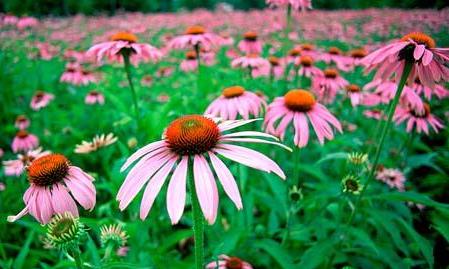
| Echinacea (Photo credit: altmedicinezone.com) |
Sadly, most "management of symptoms" includes over the counter drugs that often don't do much to help the body heal and can sometimes end up causing harm instead. I watched (and experienced) this happen time after time during the years I was a nurse. This is one of the reasons I am back in school to become an herbalist and aromatherapist; I LOVE how gentle and healing natural remedies can be. Herbs and essential oils, when used correctly, are powerful healing tools; far more complex that our standard pharmaceuticals. Because of this complexity, they are often better at treating illnesses and bringing about healing in the body.
There is a time and place for modern medicine. But, I think most common illnesses and sicknesses can be managed much better by holistic medicine (herbs, essential oils, homeopathy, accu-puncture, etc).
![]() |
| Elderberry (Photo credit: natures-health-foods.com) |
If you are a reader who is interested in learning about antibiotic alternatives and other ways to gently heal the body, there are a few things I would recommend:
1) Start to create your own holistic network.
Find a local herbalist, aromatherapist, homeopath, accu-puncturist, and naturopath. It can take a while to build up a holistic network, but it's worth the wait. I have personally found that I need different types of holistic care at different times. Sometimes homeopathy works great but other times I feel myself really needed a good accu-puncture treatment or a particular herbal remedy.
2) Start to educate yourself.
There are two books that I recommend you read (just click the title and I have linked it to the books so you can read more about them): Herbal Antibiotics by Stephen Buhner and Natural Alternatives to Herbal Antibiotics by John McKenna. Both these books are easy to read and very informative.
3) Consider taking an on-line course.
There are many courses that you can take. For beginners looking for some basic health and herbal knowledge, try Vintage Remedies The Family Herbalist. This course can be done on your schedule and will be a great starting point to learn how to treat you and your family from a more natural approach.
If you are interested in aromatherapy, then I highly recommend Aromatherapy 101 through the East West School of Herbal and Aromatic Studies. This course will give you a basic knowledge platform to learn how to treat your family with essential oils. I think you will be amazed at the healing properties of these oils.
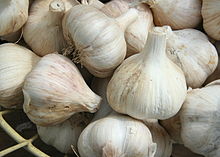
| Garlic (Photo credit: en.wikipedia.org) |
Monday, February 13, 2012
Cardamom
Last week I posted this recipe for a delicious, medicinal chai. One of my favorite ingredients is cardamom, as it helps add depth and intensity of taste to my chai recipe.
![]() |
Photo credit: guerlain.pl |
Cardamom has many wonderful health benefits, which include:
*detoxifying benefits
*digestive aid and helps with stomach discomfort, including a reduction in acid
*a good source of minerals like calcium, potassium, magnesium, iron, manganese and copper
*the pods are a good source of vitamins that include vit. C and vit. B
*helps to cleanse the kidneys and strengthen the urinary tract system
*improves the circulation of the lungs and can be helpful for treating asthma
*can help to reduce depression
![]() |
Photo Credit: bigoven.com |
Monday, February 6, 2012
Delicious, Medicinal Chai
I love chai! Lately I have been getting a bit creative with our chai teas and adding all kinds of medicinal herbs to them. They come out tasting so yummy with plenty of health benefits to boot! Here is a basic chai recipe and some additional herbs you can add for fun. Try adding one or two the next time you make your chai for a new healthy boost. All these herbs can be found at Mountain Rose Herbs. Just click on my link to the right to order. (Enjoy looking around their site - they have amazing products! If you are a tea lover, check out all their tea selections!)
Have fun and here's to a healthy winter season! (I have linked the herbs to Christopher Hobbs Herbal Prescriber Database if you would like to read more about their healthy benefits. Be sure to scroll down the entire page as he has a lot of excellent information.)
Those pregnant and breastfeeding need to consult their physician or midwife before using herbs, even in recipes like this.
![]() |
photo credit: wildthymeherbshop.com |
Basic Chai: (Makes 2-3 servings)
4 cups of water
5 cloves
10 peppercorns, any color
1/2 tsp anise seed
1 T dried ginger root
2-3 tsp of black tea
milk and sucanat to taste if preferred (I often drink mine without milk or sucanat)
Place the 4 cups of water in a glass pot and add all the herbs. Cover and bring to a simmer and allow to simmer on low for 45 minutes. If water levels are low, add back enough water so there is 3-4 cups. Add your milk and sucanat to taste. Enjoy!
![]() |
photo credit: cuculinary.com (star anise) |
Herbs to add for additional medicinal benefit (try using only 1-3 at a time, as some can have a strong taste to them). I have linked each herb to Christopher Hobbs Herbal Prescriber Database if you would like to read about the health benefits of each of these herbs. Be sure to scroll down the entire page - he has a lot of great information.
![]() |
photo credit: elenaspantry.com (licorice root) |
3-4 pieces of astragalus root
3-4 pieces of licorice root
1 tsp burdock root
1/2 tsp yellow dock root
1 tsp dandelion root
2 tsp crushed milk thistle seed
1 tsp echinacea root (use only if sick)
Tuesday, January 24, 2012
Red Raspberry Leaf
Red raspberry leaf has become the herb of choice for pregnant women due to it's ability to tone the uterus, shorten labor, and help prevent cervical tears, but I would also like to list its benefits outside of pregnancy. We regularly consume this herb in our household as a tea.
Here are just some of the other benefits of red raspberry leaf:
*helps to balance hormones
*rich in minerals such as calcium, iron, manganese, and phosphous
*rich in vitamins A, B, and C
*due to it's astringent (tightening) properties, this herb is excellent for diarrhea, even for children
*good to use when you have a cold or a fever because of it's antiviral and antibacterial properties
*helps with sterility
*bleeding and inflamed gums
*helps to reduce blood sugar
My favorite way to use this herb is to make a tea with the leaves. Adults and children can take this herb. I like to give it to my son once a week or so due to the vitamin and mineral content. If you are giving this to a child, be sure that you use the proper formulas, most often by weight, to figure out the safe dose. Many formulas can be found online and I will also be doing a future post. My best advice for giving herbs to children is to buy the book Gentle Healing for Baby and Child. This author reviews how to determine dose and what herbs can be safely given to children.
Wednesday, January 18, 2012
Homemade Herbal Shampoo
I have long been looking for an organic shampoo that works well and does not cost an arm and a leg and it has finally come down to me starting to make my own. I adapted a recipe from herbmentor and so far am liking it. I suggest you reading the post as they offer different ingredients for different hair types. My hair tends to be on the oily side and thin, so here is the formulation I came up with for my hair (I used all organic ingredients):
*8 ounce distilled water
*2 tsp nettle
*2 tsp oat straw
*3 ounces castille soap
*3 T aloe vera gel
*1/4 tsp jojoba oil
*15 drops rosemary essential oil
*5 drops sage essential oil
*3 drops tea tree oil
*7 drops lavender essential oil
Bring the distilled water to a boil. Place the nettle and oat straw in a 16 ounce glass bottle. Pour the hot water over the herbs and allow to sit for 30 minutes. In a 16 ounce glass bottle add essential oils. Roll the bottle in your hands (with cap on) to allow the oils to mix together. Then add jojoba oil and again roll the bottle for a few seconds. Strain the nettle and oat straw tea and add to the jar with the essential oils. Add the castille soap and aloe. Lightly shake to mix well. This should last a few months, keep in fridge to extend shelf life. Use about 2 tsp to 1T worth per shampoo. Avoid getting in eyes because of essential oils and shake well before each use.
![]() |
| photo credit: www.itsnature.org |
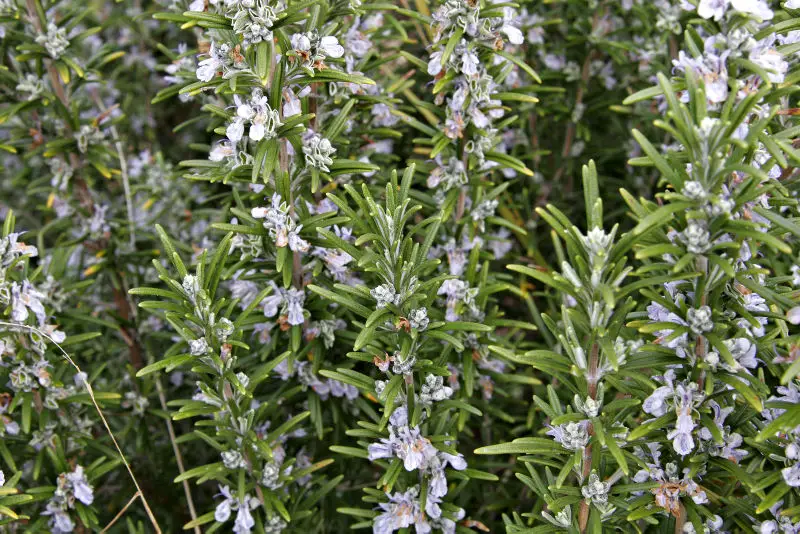
I used more rosemary in my essential oil base because it is very beneficial for the scalp and hair. It helps stimulate hair growth and helps hair to grow stronger and longer. It also is touted to slow hair loss and pre-mature graying.
If you want to use this shampoo while nursing or pregnant, leave out the essential oils.
Tuesday, January 17, 2012
Yellow Dock - An Iron Rich Tea
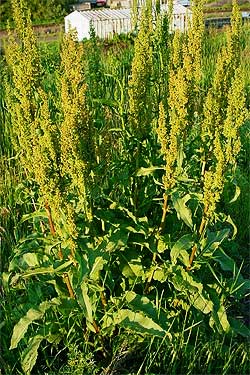
As I have been recovering from my miscarriage, I have been looking for natural sources of iron to take to make sure I do not become anemic. Yellow dock root is an excellent source of iron and can easily be made into a tea. Because it is a root, it needs to be made as a decoction, which means that it needs to be simmered to extract all it's healing properties. Please read my post HERE for complete instructions on how to make a simple decoction. I often combine yellow dock root with burdock and dandelion roots and brew all three together.
![]() |
photo credit: www.middlepath.com |
Not only is yellow dock rich in iron but it has other benefits that include:
*cleansing the blood
*cleansing the liver
*cleanses the digestive system
*can act as a mild laxative
*can help to clear acne and eczema
*improves the function of the kidneys and lymph
*rich in vitamins and mineral which include iron, calcium, and magnesium
If you have any medical conditions or are nursing or pregnant, always talk with your practitioner before starting any herbs. And as with all herbal remedies, I recommend rotating through your herbs.
Wednesday, January 11, 2012
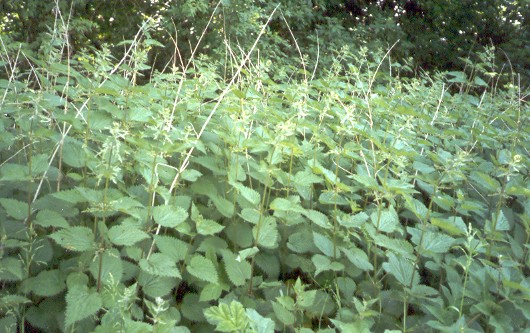
Benefits of Nettle Tea
Nettle tea is one of the standard teas that we consume in our home. It is an extremely nourishing tea that can be consumed by adults and children alike.

Some of the benefits of nettle tea includes:
*rich in minerals, including calcium, magnesium, and zinc
*rich in iron and vitamin C which helps the body to absorb iron
*gently cleanses the body from metabolic wastes
*gentle, stimulating effect on the kidneys
*can be drunk during labor to help ease labor pains
*acts as an antihistamine
*acts as a diuretic
*helpful in eliminating eczema with it's gentle cleansing actions
An infusion (see directions here), can easily be made with dried nettle leaves. I often combine this with red raspberry leaf, lemon balm, or peppermint.

(photo credit: www.purplesage.org.uk)
Some of the benefits of nettle tea includes:
*rich in minerals, including calcium, magnesium, and zinc
*rich in iron and vitamin C which helps the body to absorb iron
*gently cleanses the body from metabolic wastes
*gentle, stimulating effect on the kidneys
*can be drunk during labor to help ease labor pains
*acts as an antihistamine
*acts as a diuretic
*helpful in eliminating eczema with it's gentle cleansing actions
An infusion (see directions here), can easily be made with dried nettle leaves. I often combine this with red raspberry leaf, lemon balm, or peppermint.
Friday, December 30, 2011
Nourishing, Calming Oat Straw
Has the holiday rush left you feeling worn out and in need of some rejuvenation? I have just the herb for you! Oat Straw is a wonderfully nourishing, calming, and strengthening herb. Some of its benefits include:
*calms emotions
*support and strengthening of the nervous system
*helps to promote deep and restful sleep
*nourishes the endocrine system
*fights anxiety, depression, and nervous exhaustion
*anti-inflammatory
*relieves headache and pain
*improves focus and concentration
*boosts the immune system
*nourishes the heart and circulatory system
*helps with healthy digestion
*helps treat osteoporosis
Oat Straw is rich in calcium, magnesium, phosphorus, iron, vit. A and B vitamins. Oat Straw can be taken as a tea using 1-3 teaspoons of dried herb infused in 1 cup of water for 15-30 minutes drunk up to 3 times a day, or to pull out the minerals, make your infusion before you go to bed and it will be ready to drink the next day. (This is the dose for an adult.) This herb is not a quick fix herb, but needs to be consumed over time. A few times a week is often what is recommended.
Oat Straw is quite inexpensive and can be purchased from Mountain Rose Herbs. This is an herb that I always keep on hand and it is regularly consumed by my family. You can click on the Mountain Rose Herb icon just to the right to purchase.
photo credit: wikipedia
Thursday, December 1, 2011
Elderflower
This month Mountain Rose Herbs is having a 20% off sale on elderflower. This is the perfect time of year to buy it. Elder flowers have many benefits; two of them being a great fever reducer and immune system builder.
A tea can be made with the flowers, taking 2 teaspoons of flowers and pouring 8 ounces of hot water over them. Allow this to sit for 15-20 minutes, then sip the tea over the next hour or two. This tea can be a bit strong, so I recommend adding some raw honey to it. Dosing varies depending on where you read, but I would recommend 3-4 cups a day for treating an acute symptoms such as a fever (but do not continue this dosing for more than a few days). For building the immune system, I would drink 1 cup every few days. These doses are for adults.
Wednesday, November 30, 2011
More on Sleep
It seems as though I hit upon a hot topic with regards to needing a peaceful nights rest! I thought I would do a follow up post regarding herbal treatments for insomnia. There are three herbs that I would like to discuss and these can all be bought inexpensively at Mountain Rose Herbs.
It is important to note, though, that if you suffer from insomnia, you should try to identify the underlying cause, such as stress, hormones, lifestyle, or a medical issue, so that you can make the needed changes and find the appropriate herb or oil to help you in the interm. I do recommend rotating herbs and taking breaks from herbal treatments. Too much of anything is not a good thing.
Chamomile - this is a standard treatment for insomnia. You can make an easy brew to drink 45 minutes before bedtime by placing one teaspoon of herb to steep in 1 cup of hot water for 15 minutes.
Valerian Root - valerian is an herb that many use to treat insomnia. It's a strong herb and one that I would recommend rotating frequently. This is brewed differently than your typical tea. A decoction is made of this root by taking 1 teaspoon and pouring a cup of cold water over it and letting it sit all day. Drink 45 minutes before bed.
Lemon Balm - this herb is great for helping you to relax, so if stress is contributing to your insomnia, you may want to give this herb a try. Take one teaspoon of herb and pour 1 cup of hot water over it, letting it sit for 15 minutes. Drink 45 minutes before bed.
It is important to note, though, that if you suffer from insomnia, you should try to identify the underlying cause, such as stress, hormones, lifestyle, or a medical issue, so that you can make the needed changes and find the appropriate herb or oil to help you in the interm. I do recommend rotating herbs and taking breaks from herbal treatments. Too much of anything is not a good thing.
Chamomile - this is a standard treatment for insomnia. You can make an easy brew to drink 45 minutes before bedtime by placing one teaspoon of herb to steep in 1 cup of hot water for 15 minutes.
Valerian Root - valerian is an herb that many use to treat insomnia. It's a strong herb and one that I would recommend rotating frequently. This is brewed differently than your typical tea. A decoction is made of this root by taking 1 teaspoon and pouring a cup of cold water over it and letting it sit all day. Drink 45 minutes before bed.
Lemon Balm - this herb is great for helping you to relax, so if stress is contributing to your insomnia, you may want to give this herb a try. Take one teaspoon of herb and pour 1 cup of hot water over it, letting it sit for 15 minutes. Drink 45 minutes before bed.
Friday, November 18, 2011
What to Have on Hand to Boost the Immune System For the Holiday Rush!
Thanksgiving week is almost here, which means for most, travel, visiting with family, and a busy schedule. There are a few easy supplements you can have on hand for this next week:
*Vitamin D - This is a great support to the immune system and since most are not getting their daily dose of sun this time of year, this is critical to take to keep your immune system healthy.
*Elderberry syrup - This is quick and easy to make (here is the recipe that I use). This can be taken daily throughout the week.
*Echinacea - At the first hint of feeling sick, start to take some echinacea. Herbs for Kids carries a great brand for children starting at the age of one and Whole Foods sells all kinds of tinctures (the liquid form I recommend for adults- but not pregnant or breastfeeding women due to the alcohol content) of echinacea that you can choose from.
*Vitamin D - This is a great support to the immune system and since most are not getting their daily dose of sun this time of year, this is critical to take to keep your immune system healthy.
*Elderberry syrup - This is quick and easy to make (here is the recipe that I use). This can be taken daily throughout the week.
*Echinacea - At the first hint of feeling sick, start to take some echinacea. Herbs for Kids carries a great brand for children starting at the age of one and Whole Foods sells all kinds of tinctures (the liquid form I recommend for adults- but not pregnant or breastfeeding women due to the alcohol content) of echinacea that you can choose from.
Friday, October 7, 2011
Elderberry Syrup...
Yes, that season of colds and flus is here. We all woke up a bit stuffy today, so I decided it was high time to mix up some homemade elderberry syrup. There are lots of variations of recipes out there, but this is the syrup that I made today:
*1 cup dried elderberries (You can get these from Mountain Rose Herbs.)
*4 cups of filtered water
*10 whole cloves
*2 cinnamon sticks
*1 tbsp of fresh grated ginger
*2 cups of raw honey
Combine the first five ingredients in a stove top pot and bring to a boil. Once boiling, turn down to a simmer and allow to simmer for 30-40 minutes until the liquid reduces to about half. Once the simmering is completed, strain into a jar and allow to cool to about 90 degrees. Next add the raw honey (you want to be sure that the liquid has cooled to 90 degrees so that when the raw honey is added, you retain the healthy benefits of the honey.) Store in the refrigerator. Discard after a month.
Adults can take 1 Tbsp daily. Child's dose will need to be decided by weight. There are many ways to determine a child's dose and parents should use whatever formula they feel most comfortable using. These can easily be found on the internet. Clark's Rule and Young's Rule are just two examples of methods that can be used to determine your child's dose. This syrup should not be given to children under the age of two. Pregnant and lactation women should consult their practitioners.
This is a great immune syrup to take during cold and flu season. It's delicious and your dose can be taken alone or used to top ice cream, strudels, crisps, pancakes...well, you get the idea!
In our home, we tend to rotate through our supplements and do not take most things on a daily basis. If you chose to do this with the elderberry syrup, this is a great supplement to take when you know that you will be around a lot of people. If we are going to an event, I will usually have us take it the day before, day of, and day after to help keep our immune systems boosted while being exposed to germs.
*1 cup dried elderberries (You can get these from Mountain Rose Herbs.)
*4 cups of filtered water
*10 whole cloves
*2 cinnamon sticks
*1 tbsp of fresh grated ginger
*2 cups of raw honey
Combine the first five ingredients in a stove top pot and bring to a boil. Once boiling, turn down to a simmer and allow to simmer for 30-40 minutes until the liquid reduces to about half. Once the simmering is completed, strain into a jar and allow to cool to about 90 degrees. Next add the raw honey (you want to be sure that the liquid has cooled to 90 degrees so that when the raw honey is added, you retain the healthy benefits of the honey.) Store in the refrigerator. Discard after a month.
Adults can take 1 Tbsp daily. Child's dose will need to be decided by weight. There are many ways to determine a child's dose and parents should use whatever formula they feel most comfortable using. These can easily be found on the internet. Clark's Rule and Young's Rule are just two examples of methods that can be used to determine your child's dose. This syrup should not be given to children under the age of two. Pregnant and lactation women should consult their practitioners.
This is a great immune syrup to take during cold and flu season. It's delicious and your dose can be taken alone or used to top ice cream, strudels, crisps, pancakes...well, you get the idea!
In our home, we tend to rotate through our supplements and do not take most things on a daily basis. If you chose to do this with the elderberry syrup, this is a great supplement to take when you know that you will be around a lot of people. If we are going to an event, I will usually have us take it the day before, day of, and day after to help keep our immune systems boosted while being exposed to germs.
Friday, September 16, 2011
Blackberry Leaf Tea...
I found out the hard way that flu season has definitely started. Our family was hit with a stomach bug this week - mainly causing intestinal distress, if you catch my drift.
Only one of us had a fever and thankfully that was kept under control with an herbal tea of yarrow, peppermint, and elder flower (this tea was made for my husband). My son so far has not had a fever, but I do have on hand TempAssure by Herbs for Kids, which has some of the same herbs to help support the body when dealing with a fever. An aside, which really needs to be a post on it's own, fevers can be good! They are your body's way of killing off germs. As a rule of thumb, I do not treat a low grade fever (below 101 for adults, 100.5 for kids) with tylenol, but instead will give supportive herbs, like the ones mentioned above, which encourage sweating and eventually help to break the fever. In my husbands case, he started to have the fever early evening and by the next morning it was gone.
Back to the intestinal distress! Blackberry leaf tea is a very mild herb and wonderful for treating diarrhea. I was able to brew this for my husband and my son (who is a year and a half) and in both cases, it stopped the diarrhea in it's tracks. For my husband, I mixed some peppermint tea in with the blackberry to make it more appealing for him and for my son, I mixed it with some water flavored with a touch of cherry juice concentrate.
A great way to make sure your loved ones are well hydrated during times like these, is to have them drink plenty of coconut water, which is naturally full of electrolytes. Another great option is Recharge, a natural electrolyte drink. You want to avoid sugary "sports drinks", as the sugar will only serve to lower your immune system as it is working hard to fight off the bug.
Only one of us had a fever and thankfully that was kept under control with an herbal tea of yarrow, peppermint, and elder flower (this tea was made for my husband). My son so far has not had a fever, but I do have on hand TempAssure by Herbs for Kids, which has some of the same herbs to help support the body when dealing with a fever. An aside, which really needs to be a post on it's own, fevers can be good! They are your body's way of killing off germs. As a rule of thumb, I do not treat a low grade fever (below 101 for adults, 100.5 for kids) with tylenol, but instead will give supportive herbs, like the ones mentioned above, which encourage sweating and eventually help to break the fever. In my husbands case, he started to have the fever early evening and by the next morning it was gone.
Back to the intestinal distress! Blackberry leaf tea is a very mild herb and wonderful for treating diarrhea. I was able to brew this for my husband and my son (who is a year and a half) and in both cases, it stopped the diarrhea in it's tracks. For my husband, I mixed some peppermint tea in with the blackberry to make it more appealing for him and for my son, I mixed it with some water flavored with a touch of cherry juice concentrate.
A great way to make sure your loved ones are well hydrated during times like these, is to have them drink plenty of coconut water, which is naturally full of electrolytes. Another great option is Recharge, a natural electrolyte drink. You want to avoid sugary "sports drinks", as the sugar will only serve to lower your immune system as it is working hard to fight off the bug.
Monday, September 12, 2011
Sambucol
The start of fall, back to school, cool weather...this combination often signals the beginning of cold and flu season. This is the perfect time to make sure that you have plenty of Sambucol on hand! Sambucol is a brand of elderberry syrup that has had multiple studies done on it's effectiveness against flu viruses. It is also extremely effective for fighting colds. It comes in both adult and children's strength (children can start to use it at the age of 2). I recommend this particular brand because of it's proven effectivenss. It can be purchased from multiple sites on-line, including Amazon and Vitacost.
This is a standard in our household and it has proven effective a number of times already this year! You can take it daily as a preventative or take it immediately when the first cold/flu symptoms are felt.
Subscribe to:
Posts (Atom)